
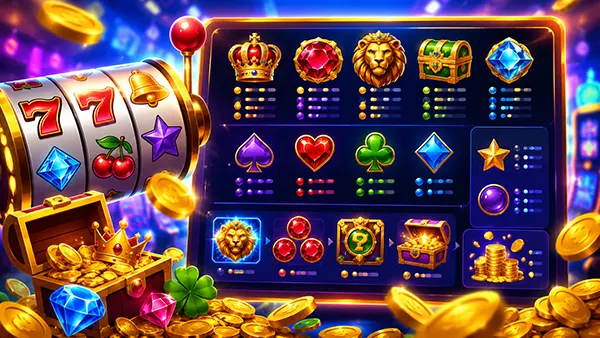
How to Read a Modern Slot Paytable: Symbols, Multipliers and Bonuses
Understanding a slot paytable is one of the most useful skills any casino player can develop. While modern video slots often impress with detailed graphics, animated features and multiple bonus mechanics, every important rule is explained inside the paytable. It describes how winning combinations are formed, the value of each symbol, the function of special icons, available multipliers and the conditions required to activate bonus rounds. Learning to interpret this information helps players choose games that suit their preferences and reduces confusion during gameplay.
What Information Is Included in a Slot Paytable?
The paytable acts as the official guide for every slot game. Although its appearance differs from one developer to another, the information provided follows similar principles across most licensed online casinos. Players can normally access the paytable before placing any bet by selecting the information or menu icon inside the game.
One of the first sections explains the game’s layout. This includes the number of reels, rows and winning methods. Traditional slots usually rely on fixed paylines, while many modern releases use systems such as Megaways™, Cluster Pays, All Ways Pays or other mechanics that determine how winning combinations are created. Understanding this section prevents incorrect assumptions about how symbols actually pay.
The paytable also specifies the minimum and maximum stake, whether the game uses fixed or adjustable paylines, and if winnings are calculated according to the total wager. These details allow players to understand how different betting levels influence potential payouts before spinning the reels.
Understanding Standard Symbols and Their Values
Every slot contains standard paying symbols. These usually include themed characters, objects or icons that fit the game’s design. Each symbol has its own payout value, displayed as a multiplier of the current stake or as a fixed value depending on the game’s rules.
The highest-paying standard symbol normally awards the largest prize when enough matching icons appear on an active payline or according to the game’s winning mechanic. Lower-value symbols often resemble traditional playing card ranks such as A, K, Q, J and 10. Although these appear frequently, they usually provide smaller returns.
The paytable clearly states how many matching symbols are needed to create a winning combination. Some games require three matching symbols, while others reward combinations starting from two identical icons. Reading this information carefully helps players understand why certain reel outcomes produce payouts while others do not.
Special Symbols: Wilds, Scatters and Multipliers
Modern slots include special symbols that perform functions beyond ordinary payouts. These symbols often influence both the frequency and size of potential wins. Their exact behaviour varies between games, making the paytable essential before starting play.
The Wild symbol usually substitutes for most regular symbols to complete winning combinations. However, Wilds often cannot replace Scatter, Bonus or Jackpot symbols unless the paytable specifically states otherwise. Some games also introduce Expanding Wilds, Sticky Wilds, Walking Wilds or Shifting Wilds, each operating under unique rules explained in the game’s information section.
Scatter symbols generally trigger bonus features independently of paylines. Instead, they only require a certain number of appearances anywhere on the reels. Depending on the slot, landing three, four or five Scatter symbols may activate free spins, bonus games or additional reward features.
How Multipliers Affect Potential Winnings
Multipliers increase the value of a winning combination by a specified amount. A 2× multiplier doubles a payout, while a 5× multiplier increases it fivefold. Modern slots may apply multipliers during standard gameplay, bonus rounds or both.
Some games feature accumulating multipliers that grow throughout free spins or after consecutive wins. Others reset the multiplier after every spin. Progressive multiplier systems are particularly common in cascading slots, where symbols disappear after a win and new ones fall into place without requiring another wager.
The paytable explains exactly when multipliers become active, whether several multipliers can combine, and if any maximum payout limits apply. Reading these rules helps players understand how unusually large wins become possible during certain bonus features.
Reading Bonus Features Before You Start Playing
Bonus features often distinguish one slot from another. While two games may share similar themes, their bonus mechanics can create very different playing experiences. The paytable explains how each feature works, what conditions activate it and whether it can significantly increase potential returns.
Free spins remain the most common bonus feature in modern slots. The paytable specifies how many Scatter symbols are required, the number of free spins awarded initially and whether additional free spins can be collected during the feature. Some slots also include enhanced reel sets, guaranteed Wilds or higher multipliers throughout the bonus round.
Many recent releases also feature interactive bonus games. These may involve selecting objects to reveal cash prizes, choosing different reward paths or unlocking several stages that increase payout opportunities. The paytable normally explains the activation requirements and basic rules without revealing every possible outcome.
Additional Rules That Can Influence Gameplay
Besides symbols and bonus features, modern paytables include several technical details that players should never overlook. One of the most important is the maximum possible win. Many licensed slots clearly state the highest payout available, often expressed as a multiple of the total stake. Some games can reach 5,000× the bet, while others advertise limits exceeding 20,000× or even 50,000× depending on their design.
The volatility or variance of a slot is another useful indicator. Although not every developer displays this information directly, many now include a volatility rating within the game’s information section. High-volatility slots usually produce less frequent but potentially larger payouts, whereas low-volatility games tend to deliver smaller wins more regularly. Medium-volatility titles attempt to balance these two approaches.
The paytable may also explain special mechanics such as cascading reels, symbol collections, reel expansions, bonus buy options where legally permitted, random modifiers or progressive jackpot features. Reading these sections before placing a wager provides a much clearer understanding of how the entire game operates instead of relying only on visual presentation.
A careful review of the paytable gives players realistic expectations before gameplay begins. Rather than focusing only on promotional descriptions or attractive graphics, experienced players use the paytable to compare symbol values, identify bonus mechanics and understand the mathematical structure behind each slot.
No paytable can predict future results because every spin in a licensed slot is determined independently by a certified random number generator. However, understanding the game’s rules allows players to recognise how payouts are calculated, when bonus features become available and which symbols contribute most to potential rewards.
Developing the habit of checking the paytable before playing takes only a few minutes but provides valuable information that many casual players overlook. Whether choosing a classic three-reel machine or a feature-rich video slot released in 2026, understanding symbols, multipliers and bonus rules remains one of the simplest ways to make informed decisions during casino play.